
The Wild Edges
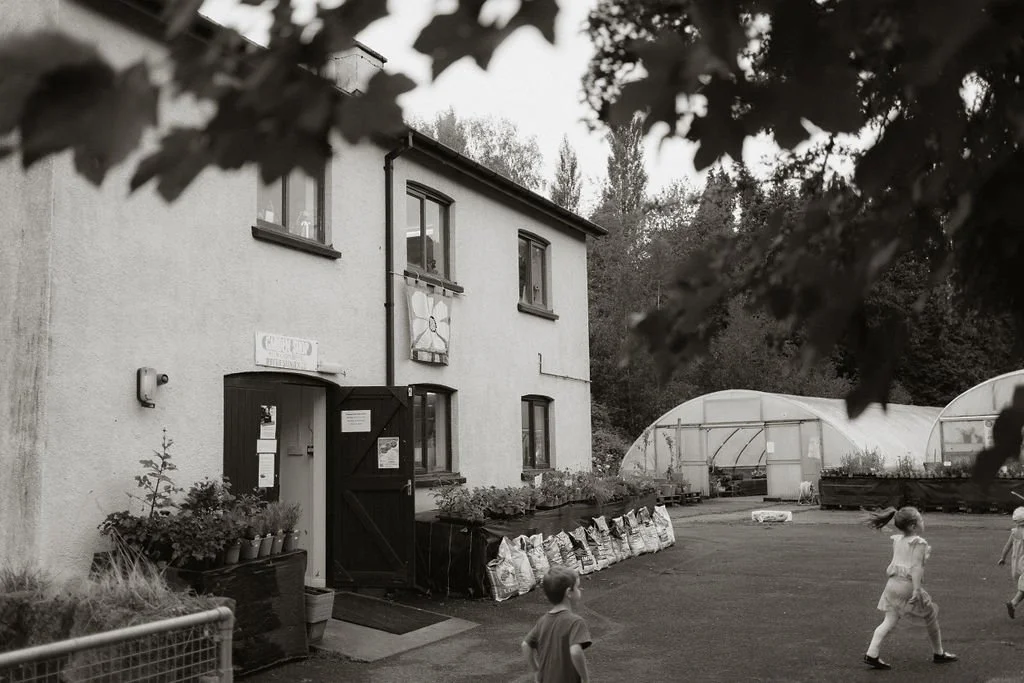
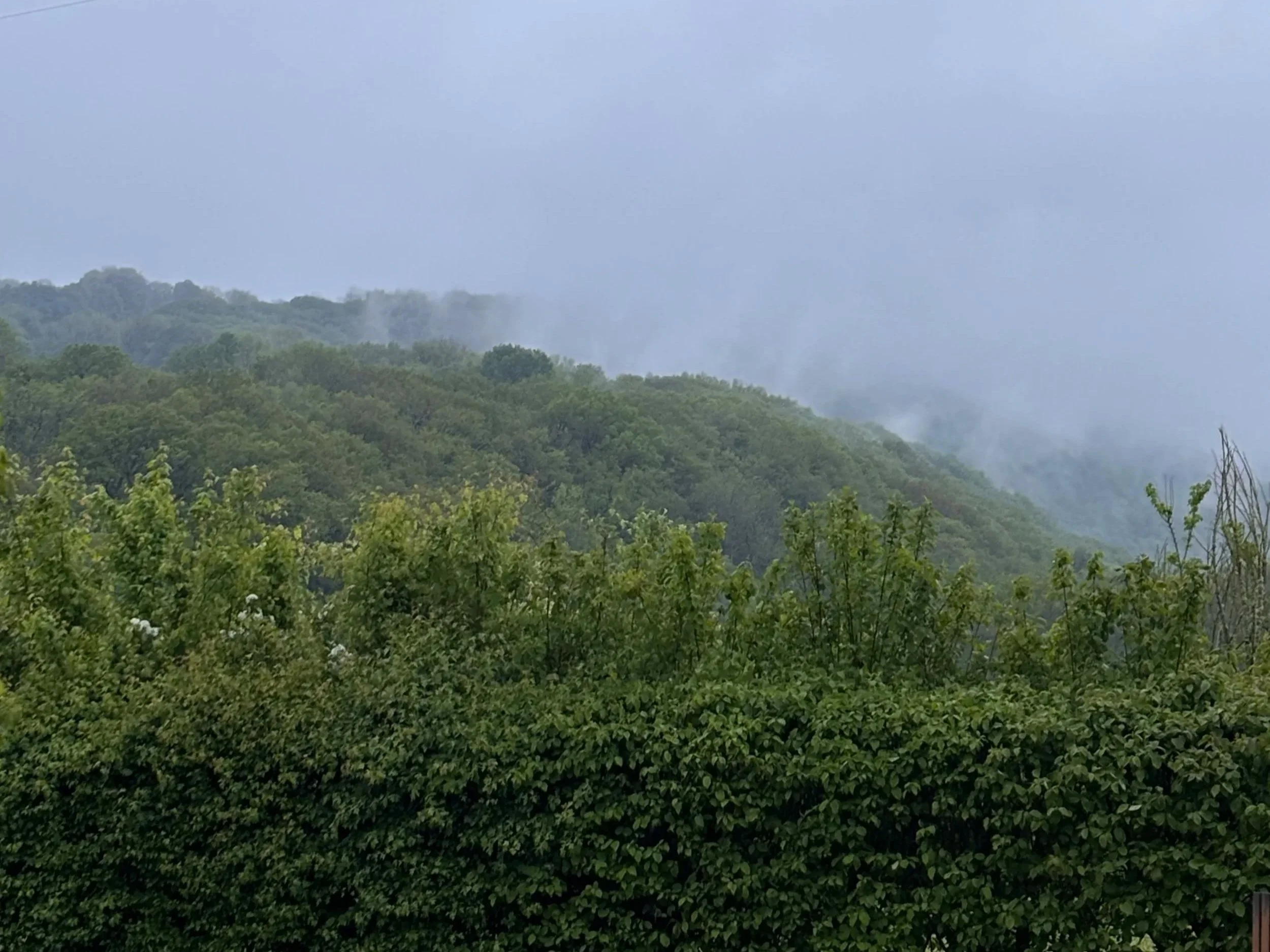
I work and live in the Teign Valley on the edge of Dartmoor. My studio is above a plant nursery that has been in the same family for generations and the land around it is wild and unkempt but full of life. Deer move through the fields, birds of prey circle overhead, and every summer House Martins build a nest under the eaves. There is so much abundance here that I’m never short of things to observe and draw from.
When I think about where this fascination with plants began, I always find myself returning to childhood and thinking about nature and the wild spaces I played in. Camping out under the stars, making bows and arrows from sticks in the woods or finding frogs in my grandparent’s pond with my cousins. Someone always fell in!
It was always these wild edges that I was curious about - picking elderberries from the hedgerows with my dad to make wine, the field beyond the playground that was left to meadow and was strictly out of bounds, or the mountains that we’d visit every year and camp beside in a farmers field intended only for his sheep. Places where nature had been left to make its own decision or where there was only a light human touch.
From an early age, I watched my mother grow food at the allotment. She finds great joy in tending to the plants, tying stems back, pinching out the seedlings, edging borders and weeding. It’s very cathartic to her busy mind and as I’ve got older, I’ve come to understand it as a way of making sense of things. I was surrounded by a lot gardeners as a child, not just my mother but my grandparents and family friends including Matt. We would go camping with Matt and his family and he would point out every mushroom variety we came across, talk at great lengths about his composting toilet and swap tips about how best to grow tomatoes. He was, and is, a mine of information about living off the land.
Every spring I find myself surprised by the same thing. Plants I have completely forgotten about reappear as though they had only briefly stepped out of view. Others vanish and never return. The longer I spend looking at plant life, the less permanence seems to exist anywhere and I often think about the ghosts of plants too in the way the soil remembers what once grew there. A gap in a border, or the negative space left behind by a root system and the species that appear only because something else disappeared first.
In my paintings, this has started to appear physically through collage. Building layers into the surface that often aren’t immediately visible. They only emerge through slowing down and looking more closely. Thinking about ecosystems in this way has also changed how I think about my own life. About what disappears, what returns, and the things that only become visible after a period of loss.
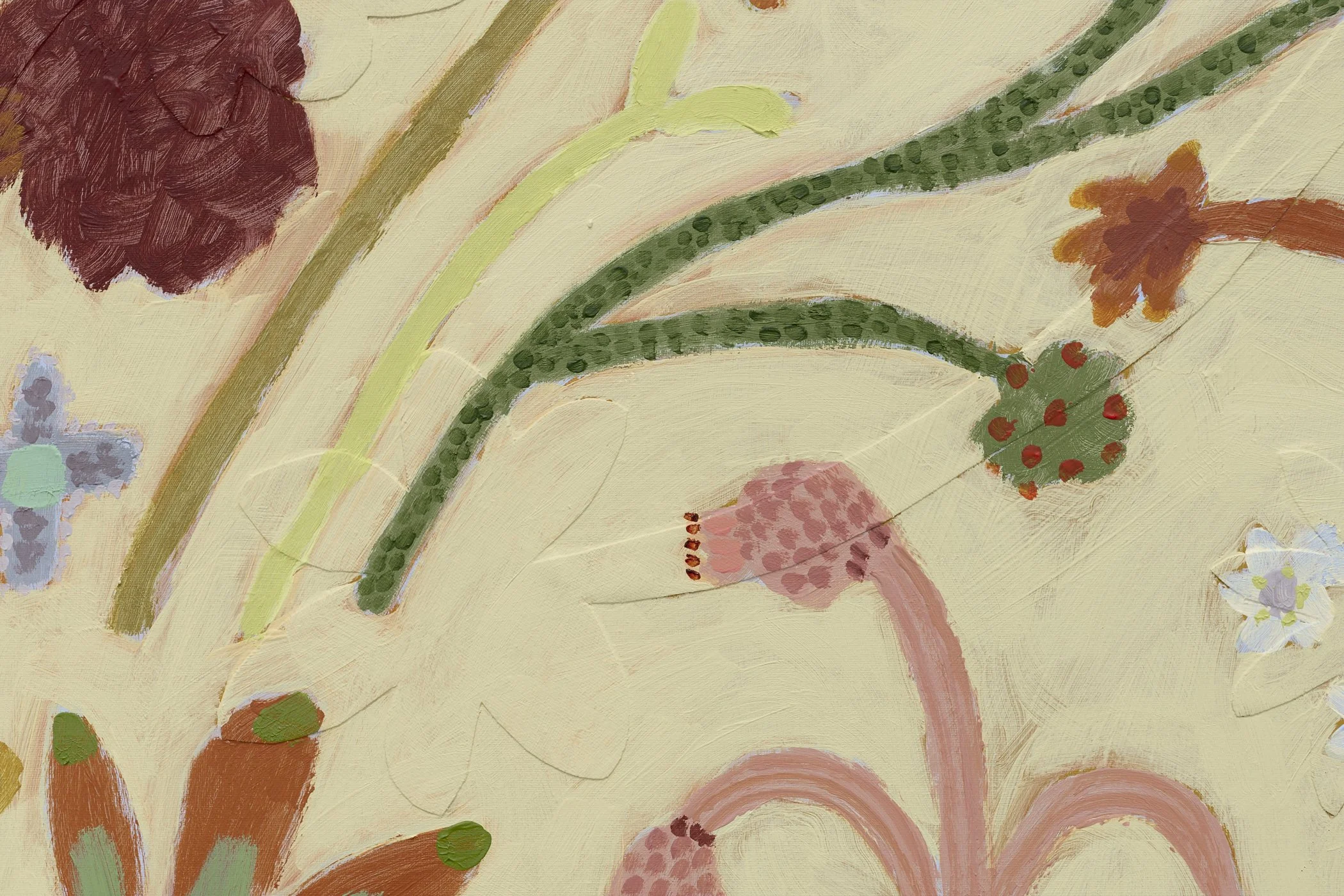
Detail of ‘Waiting for First Light’. 2026
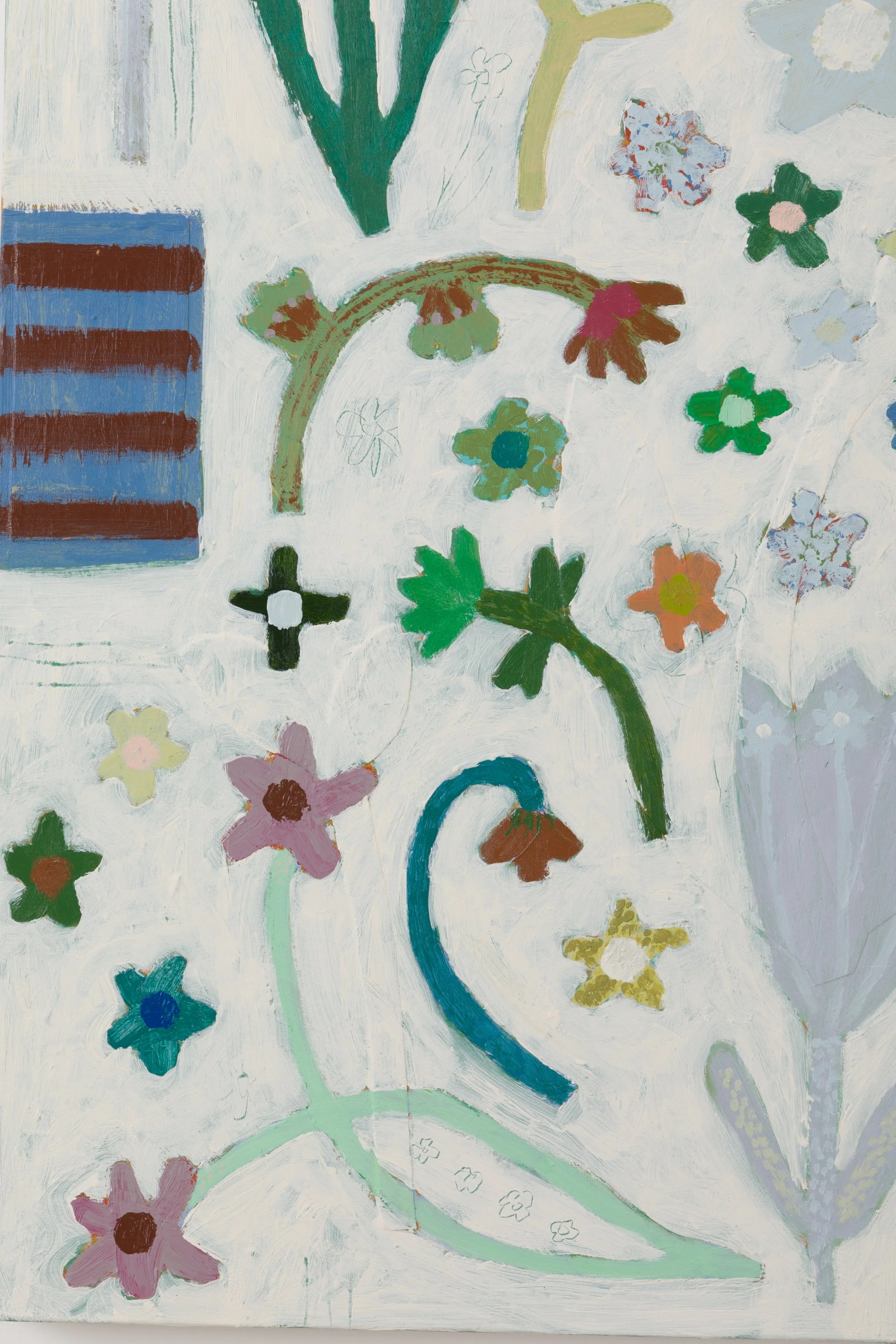
Detail of ‘Confetti’. 2026
It’s no coincidence that this slowing down mirrors my own approach to life and I don’t mean in a lethargic sense, more allowing myself to process what I’m seeing, feeling and connecting with. After turning 40 recently, I’ve found myself thinking more about cycles connected to fertility, care, exhaustion, and renewal. A difficult period in my personal life almost 5 years ago forced me into survival mode for quite a long time - both personally and professionally - and it’s only recently that I’ve properly been able to make space for my practice and give myself permission to slow everything down a little and take a breath.
That slowing down has changed how I observe the natural world. My senses have become more attentive to small changes, sounds, surfaces, repetitions and patterns, and collage has become one way of physically embedding those layered experiences into the work itself.
I paint over these uneven surfaces rather than following their shape directly, so the image holds a trace of what sits underneath it which is a bit like landscapes themselves, where different cycles and histories exist on top of each other all at once.
Recently I explored this in a work called Where the Land Breathes. I live very close to one of the UK’s remaining temperate rainforests, and I wanted to focus on the lichens, mosses and delicate plant systems that make up this breathing ecosystem. Compositionally the shapes symbolise this movement of breathing in and out, and in again.
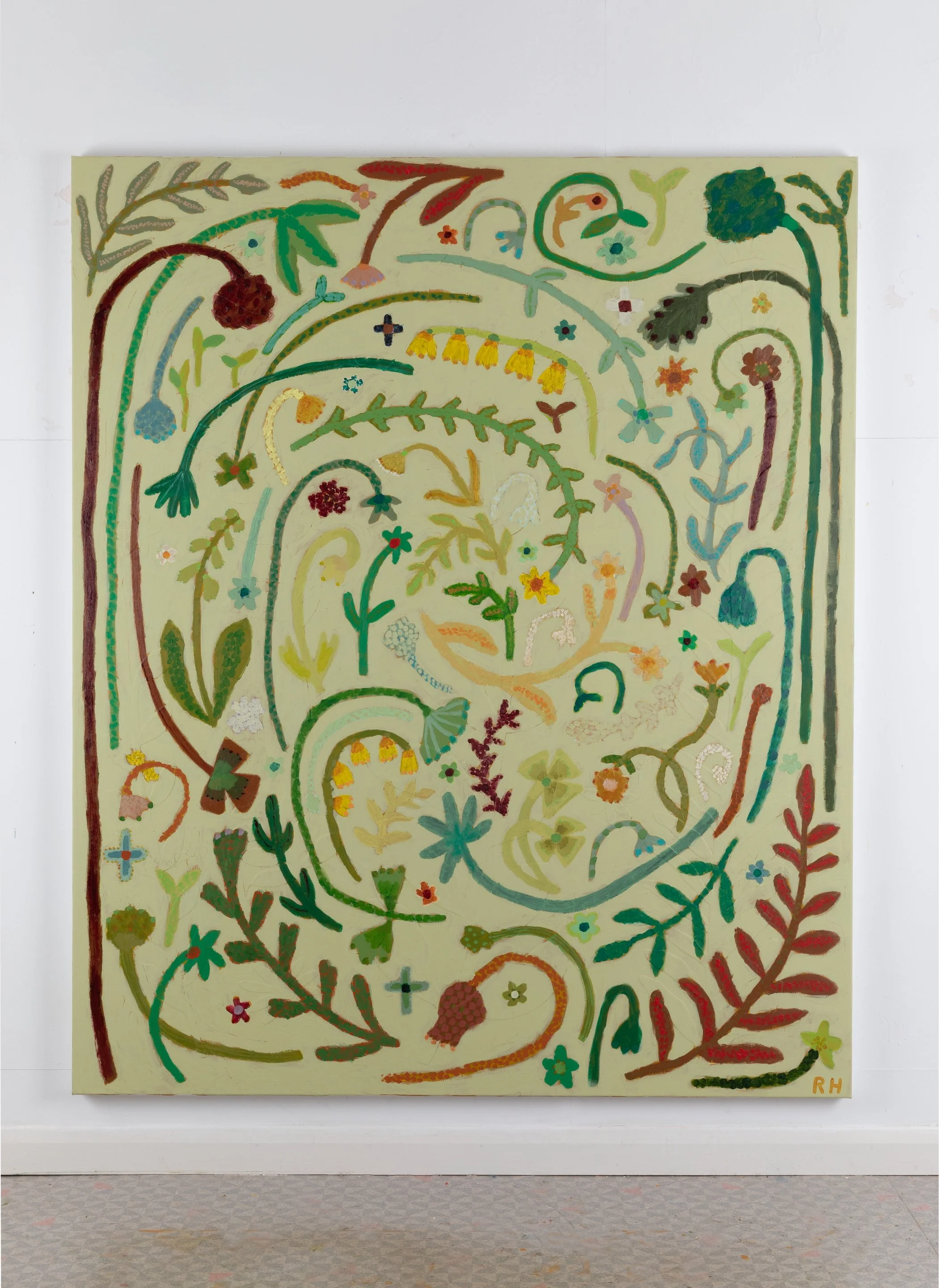
‘Where the Land Breathes’. 2026
The piece became large-scale because I wanted the body to experience the work spatially and to feel surrounded by it, in the same way I feel when I’m exploring the forest, rather than simply observe it. Before becoming a full-time painter I worked as a commercial illustrator and textile designer, mostly at a very small scale, so painting with my whole body still feels significant to me and has completely changed my relationship to making. It feels so freeing to move around the canvas after years of working very precisely. At the moment, these layered surfaces are beginning to push me toward even larger and more immersive works, which is something I’m continuing to explore moving forward.
The longer I observe the natural world, the more I feel its pull. It invites us to slow down, talk with the plants, laugh at their jokes and remember that we are all part of the same cycle.
Published June 2026
Originally delivered as a five-minute talk at a Hettie Judah event for the launch of ‘How to Enter the Artworld After…’